 Follow Dr Junk on ArcaNuova
Root-canal cleaning and vitality testing
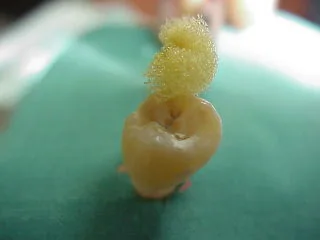
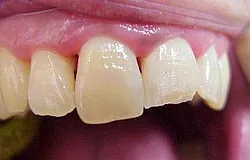
Cold test to assess pulp response
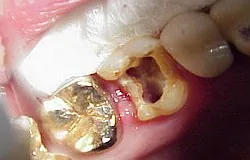
When root-canal treatment is indicated, access is made to the pulp chamber.
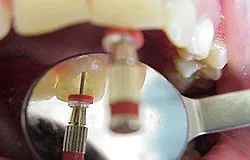
Endodontic instruments are introduced into the root canals.
Cleaning and preparation of the root canal
Clinical situation in the patient
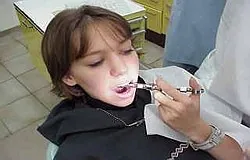
The Pulp sensibility test A cold test can help assess the sensory response of the pulp. A present response indicates responsive nerve tissue, but the test alone does not always determine the biological status of the pulp with certainty and must be interpreted together with symptoms and other findings. Pulp test / cold test
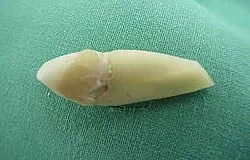
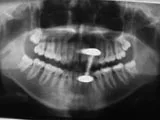
No response to a sensibility test can be consistent with pulp necrosis, but requires diagnostic confirmation. If the pulp is necrotic and the tooth is restorable, root-canal treatment aims to remove infected or necrotic tissue, disinfect and seal the canal system. Instruments should not intentionally extend beyond the apex; the historical image illustrates a situation that during root canal treatment a root-canal procedure is avoided. Intraoral radiographs and/or electronic apex-length measurement can be used to determine working length. Working-length determination today often combines an electronic apex locator and radiographs when indicated. Complex anatomy or very open apices can increase the risk of over-instrumentation or extrusion of material. The technique is chosen by the dentist or endodontist according to the case. Printable HTML text as a PDF file. If a persistent inflammatory lesion remains around the root tip after root-canal treatment, options may include endodontic retreatment, apical surgery or extraction, depending on the cause and prognosis. Not every radiolucent area is a cyst and treatment is not simply a matter of releasing pus. The decision requires clinical and radiographic diagnosis. Apical surgery is called an Apicoectomy apicoectomy or root-end resection. Modern endodontics may use nickel-titanium instruments, controlled motors, electronic apex locators, irrigation and advanced filling techniques. Costs and reimbursement depend on the healthcare system, complexity and treating facility. Historical prices stated by the former practice are not current prices.
Root-canal treatment and electronic working-length measurement Procedure at for an inflamed pulp or root canal

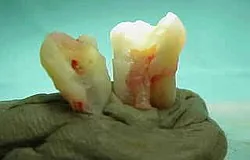
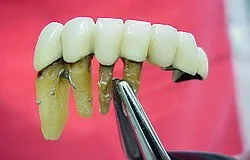
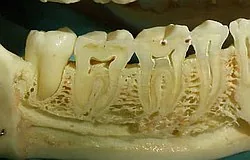
click the pictures of our female dentists and dentists

Click the images
telephone contact of the former practice - Mon-Fri 7:30 a.m.-6 p.m. (historical hours)

Historical phone: +49 (0)89 431 12 12
Dentists: Richard Forster and Johanna Egger
private and all statutory health insurance schemes
Baumkirchner Str. 18
81673 Munich Berg am Laim Trudering
Archive and website contact. Dr. Junk no longer treats patients and does not make appointments.
Urgent appointments, historically on the same day
Dental prosthesis repairs historically: please register by 9:30 a.m.

Historically, the form could be completed and printed at home to save time.
with all information pages of the former Munich practice
click the humorous practice video
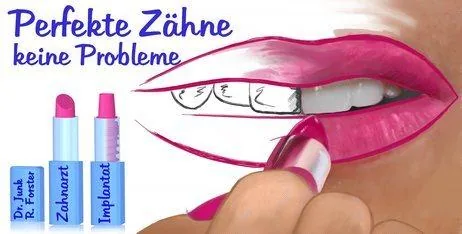
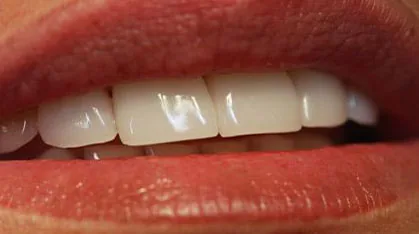
Minimally invasive, low-pain dental implants in Munich
Dental prosthetics - aesthetic fillings - Geriatric dentistry - Periodontology - root canal treatment
At the former practice, attractive teeth were created with high-tech dentistry and in-house dental laboratory equipment - all under one roof
The former dental practice on the market square in Berg am Laim was also easy to reach from Trudering, Waldtrudering and Bogenhausen.
The former practice combined services and expertise that were often hard to find elsewhere.
Historical range of services
This archive documents a long-established dental practice in Berg am Laim/Trudering that was refurbished after around 50 years of activity and employed 5 dentists, 4 dental technicians and about 20 staff members in 400 m². The different dental specialties were available on weekdays throughout the year, including holiday periods and Friday afternoons, with early opening from 7:30 a.m. The team looked after patients' dental problems and preventive care.
The former practice's in-house dental laboratory provided follow-up service for dental prosthetics. Rapid denture repair: Dental prosthesis repairs could almost always be completed within a few hours.
Better than guessing: modern 3D imaging: directly at the former dental practice.
Aesthetic, metal-free, implant-supported high-tech restorations full-contour zirconia crowns:(lower risk of chipping).
custom titanium abutments: these were produced with modern milling equipment for optimal adaptation of implant crowns to the gingival contour.
The former team aimed to preserve healthy teeth; in the event of tooth loss it was possible to replace the tooth root immediately with immediate implant placement. The minimally invasive technique aimed to reduce pain. One advantage was that minimally invasive implant procedures could often avoid expensive bone augmentation. Patients were also given advance information about implant prices(from a German manufacturer), including 3D imaging (CBCT)formerly from EUR 1,150; each additional implanthistorically from EUR 950.
Exact costs were provided before treatment. To help prevent dental problems, the prophylaxis team cleaned teeth with a gentle powder jet and polishing brush. On request there was a recall service to keep gums healthy and protect valuable restorations, even if they had been made elsewhere. The former practice had dentists and specialists for prevention, cleaning, fillings, crowns, extractions, removable dentures and minimally invasive implant treatment. practice These treatments were provided in the former Munich practice. The dental team of the former practice was the point of contact.
The former
in-house dental laboratory provided modern methods to adjust, repair or clean dental prostheses quickly. Three dental technicians looked after restorations. Detailed advice was provided on both medical aspects and costs. Because of the team structure, work could often be organised efficiently and therefore at lower cost at lower cost, saving time and sometimes money. At the time, patients could request a non-binding second opinion; advice was usually free of charge.
Web reference page
This archive was created to answer many questions about dentistry through multimedia material and clinical examples. During the active-practice years, the content was often used at the Munich practice to explain procedures. Patients could review the information at home and better understand decisions about their teeth. The images are deliberately realistic; anyone who does not want to see real photographs of the mouth should avoid the relevant galleries. A realistic image can explain more than many polished logos. Many patients reviewed the information before or after an appointment. questions historically sent to praxis@de-junk.de to the author and later collected in the FAQ The archived answers may still be useful for checking whether others have had similar problems. Today the site is solely for reading information about prosthetics, geriatric dentistry, dental aesthetics, gum problems and toothache The information does not replace an examination by your own dentist. The illustrated reference can be browsed using the navigation bar with historical clinical examples from the former practice. - low-pain and affordable -