 Follow Dr Junk on ArcaNuova
FAQ: historical email questions to the dental practice Part 2, also read Part 1
Bicycle accident involving baby teeth
Tooth jewellery
Pain after a filling
Local anaesthetic does not work
Swelling behind a molar, wisdom tooth
Tooth discolouration from medication, wine or nicotine
Can a tooth decay after root canal treatment?
Broken instrument in the root canal
Costs: dentist or laboratory?
Pus at the root tip, apical osteitis, radicular cyst, non-surgical treatment
Do extraction wounds always have to be sutured?
Tooth mobility after an accident: does insurance pay?
Root canal treatment - broken instrument
Tooth pain when biting
Severe pain after a composite filling
Ceramic crown with a visible metal margin
Dental veneers on non-vital teeth
Overfilled root canal
Does caries always hurt?
Itching gums
Maxillary sinusitis related to teeth
Labial frenulum surgery
Bicycle accident involving baby teeth
Our five-year-old son had a serious bicycle accident about a week and a half ago and injured his mouth badly. Three upper incisors are very loose, and above one of the front teeth some gum tissue is also missing. This tooth is the loosest. Our dentist suggested extracting all three teeth because it seemed unlikely that they would become firm again. We decided to wait a few weeks and hope they stabilise. Our main concern is the gum: can it grow back? At the first visit everything was still very swollen. Can an injury like this also affect the permanent teeth underneath, which the X-ray shows are still positioned high in the jaw?
From the description, the affected teeth appear to be baby teeth. At this age they would be approaching natural replacement anyway. Whether they should be kept or extracted depends mainly on stability, infection and the risk to the developing permanent teeth. Infection can damage the permanent teeth, and the trauma itself can theoretically affect them as well. This is historical general information; dental trauma in a child requires clinical and radiographic assessment by a dentist or paediatric dentist.

Tooth jewellery from a dentist
I only have a short question: did you also apply tooth jewellery? If so, how much did it cost to place a small crystal? It does not have to be a genuine stone, just something like the one shown on your website.
Historically, about EUR 180 for placement; the stone was supplied by the patient or ordered separately.
Alternatively, a small diamond could be bought from a jeweller. There are also self-adhesive versions that can be applied at home. The strongest aesthetic effect was achieved with a genuine stone and a reflective backing.
Pain after a dental filling
Yesterday two of my teeth were filled. If they are now extremely sensitive to cold and hurt almost continuously, does that mean the fillings were done incorrectly, or can this be normal shortly after treatment? How long can it last?
Some sensitivity after a filling can be temporary. If pain is severe, persists or worsens, the tooth should be re-checked by a dentist; the filling may need adjustment or replacement and the pulp may need assessment. The historical suggestion to wait around two weeks does not replace clinical assessment when symptoms are significant.
Local anaesthetic does not work
Despite several injections I still feel severe pain while the tooth is being drilled. So far none of the local anaesthetic injections has worked. Why? What can the dentist do? It happens only on the lower left side. Is this normal?
Difficulty achieving effective local anaesthesia can be related to inflammation, individual nerve anatomy and injection technique. Historically, several anaesthetic strategies were discussed, including supplemental techniques such as intraligamentary injection. Today the choice of drug and technique should be made by the treating dentist according to the clinical situation, medical history and contraindications; patients should not self-direct the use of a specific medication.
Swelling behind a molar, wisdom tooth
For about six months I have had swelling behind my last upper left molar. My dentist thinks it may be a wisdom tooth that could eventually erupt fully and does not want to remove it yet. Because the area is causing increasing pressure, I would like to know whether the wisdom tooth could already be removed now.
In general, a symptomatic wisdom tooth can be assessed for removal. Before making that decision, a clinical examination and panoramic X-ray, and sometimes additional imaging, are needed to assess its position, roots and neighbouring structures. The decision belongs with the treating dentist or oral surgeon.
Tooth discolouration from medication, wine or nicotine
Recently I have developed marked tooth discolouration. The reason is that I had to take medication, which I am no longer taking, that is known to cause staining. What dental treatment might help restore the teeth to their natural colour? Could professional cleaning with ultrasound or Airflow be sufficient?
If the staining is superficial, professional cleaning with Airflow and polishing can often restore the natural colour. If the discolouration is within the tooth structure, a different approach may be needed. A dentist can distinguish between the two.
Can a tooth decay after root canal treatment?
Hello, I found your website on the Internet and found the questions and answers very interesting. I also have a short question: can a tooth still decay after root canal treatment?
Yes. A root-canal-treated tooth can still develop decay because caries affects the external hard tissues and does not depend on pulp vitality. Such teeth may also be more brittle and require regular review.
Broken instrument in the root canal
During root canal treatment of a molar, an instrument fractured in the canal. At first I had pain for about a day every 3-4 weeks; the tooth has now been pain-free for two months. So far it only has a temporary filling and the final restoration is due. Can it be harmful to leave the fractured instrument in the root canal? Could infection remain and spread elsewhere in the body? Could it cause problems with future CT or radiological examinations? I was told the alternative would be an apicoectomy: what does that involve? Are microsurgical techniques available to reduce discomfort?
A fractured instrument in a root canal does not automatically mean treatment will fail. The risk depends mainly on when and where the instrument fractured, whether infection is present, how well the remainder of the canal system was cleaned and sealed, and how the radiographic appearance changes over time. Modern endodontic instruments are generally made from biocompatible metal alloys and do not usually prevent later radiological examinations, although they can produce local artefacts. If the tooth is symptom-free and radiographically stable, a dentist or endodontist may choose monitoring; if pain, a sinus tract or an enlarging apical lesion develops, instrument removal, retreatment or apical surgery may be considered. Before a definitive crown is placed, it is reasonable for the treating dentist to assess the clinical and radiographic prognosis. This archived answer does not replace a current endodontic assessment.
Costs: dentist or laboratory?
Over the past two years I have had several expensive ceramic restorations and bridges made, as well as root canal treatment in the upper left area. A new lower ceramic bridge then became loose. The dentist says he is not responsible. The root-canal-treated tooth has since deteriorated and I am looking for another dentist. I am interested in modern digital prosthetic techniques and lasers. Is the university dental clinic in Munich up to date and worth considering, or is it mainly for emergencies? Which alternatives genuinely make sense?
The most expensive technology is not automatically the best choice for every case. Today CAD/CAM, scanning, milling and various lasers can be useful for specific indications, but quality depends mainly on diagnosis, planning, preparation, laboratory work and clinical control. A university dental clinic can be a good option for complex cases or a second opinion, but it is not the only option. It is more useful to compare diagnosis and treatment plans with an experienced dentist or prosthodontist than to choose a practice solely because it owns a particular machine.
Pus at the root tip, apical osteitis, radicular cyst, treatment without surgery
I have a small inflammation near the root of the upper left second molar, which has returned for the second time despite antibiotics. My dentist has referred me to an oral surgeon for surgery at the root tip. I previously had a similar operation on another crowned tooth and the recovery was long and painful, so I would prefer to avoid it if possible. Are there alternatives for reaching and treating the root, even if the inlay or crown has to be replaced?
It may first be useful to read this information as well. Root canal treatment information sheet
In some cases, an apical lesion can improve after careful endodontic retreatment if the canal can be cleaned, disinfected and sealed again. Calcium-hydroxide-based materials may be used temporarily as an intracanal dressing in selected situations. The duration and protocol depend on the individual case and must be decided by the dentist or endodontist. Improvement is monitored clinically and radiographically. Antibiotics alone do not remove an infectious source within the root canal system.
Do extraction wounds always have to be sutured?
Good morning. My dentist extracted a molar at 8 this morning. It was not a wisdom tooth. I was told to bite on gauze for about an hour. Now I can see the socket: is it possible to extract a tooth without stitching the wound? Thank you in advance.
Yes. After many straightforward extractions, the socket is not sutured: a blood clot forms in the socket and healing proceeds gradually. Sutures are used when needed to stabilise a flap, control bleeding, close a surgical access or manage particular situations, for example after some wisdom-tooth procedures or an oroantral communication. If bleeding is heavy or persistent, or other problems occur, the dentist who performed the extraction should be contacted.
Tooth mobility after an accident: does insurance pay?
First of all, thank you for the informative website. Three days ago I was involved in a traffic accident as a passenger. In addition to eye injuries from the airbag, both upper front teeth are loose. One had already fractured years ago. I am wondering how to deal with the insurance company. I would not want a low-cost bridge solution because the other teeth are healthy. Is it possible for the insurer to pay at least what it would otherwise have covered, while I pay the difference for a possible implant? I was unable to get clear information by phone.
After trauma, some mobile teeth can stabilise again, but they should be assessed promptly. Depending on the injury, a dentist may temporarily splint them. It is important to document the accident and dental damage promptly with a clinical examination, radiographs and a dental report. For insurance purposes, the dentist can prepare a treatment plan and estimate for the possible options; the insurer can then state what it will cover. The rules depend on the policy and type of accident, so the event should be reported promptly and all documentation retained.
Root canal treatment - broken instrument
During root canal treatment of a molar, an instrument fractured in the canal. At first I had pain for about a day every 3-4 weeks; the tooth has now been pain-free for two months. So far it only has a temporary filling and the final restoration is due. Is it harmful to leave the broken instrument in the canal? Could inflammation still be present? Could it cause problems with future CT or radiological examinations? I was told the alternative would be root-tip surgery: what does that involve, and can it be performed with microsurgical techniques?
A fractured instrument in a root canal does not automatically mean treatment will fail. The risk depends on the fragment's position, when it fractured, whether infection is present and how well the rest of the canal system has been cleaned and sealed. If the tooth remains symptom-free and radiographically stable, monitoring may be appropriate. If pain, a sinus tract or an enlarging apical lesion develops, an endodontist can consider fragment removal, retreatment or apical surgery. Before a definitive crown is placed, the prognosis should be reassessed. The timing of follow-up radiographs should be decided by the treating dentist according to the case.
Tooth pain when biting
I occasionally have dental problems. Since yesterday morning, a filled tooth in the upper left jaw hurts when I bite, but during the day the pain almost disappears after I start chewing on that side. I am very anxious about dental visits and would like to know what this might be.
Pain when biting can have several causes, such as a high filling, a crack, inflammation of the pulp or tissues around the root. The cause cannot be determined without a clinical examination and, when needed, an X-ray. If the pain persists, worsens or becomes spontaneous, the tooth should be checked by a dentist.
Severe pain after a composite filling
I would like some advice. On my dentist's recommendation, I had tooth necks that were sensitive to cold treated. They were first treated with a laser and then covered with composite. For about two and a half weeks I have had very severe, almost continuous tooth pain. The teeth now react particularly to heat and also to pressure when biting; even lukewarm and hard foods are very painful. Heat from the bedclothes on my cheek can trigger pain at night. Is this normal after such treatment? Can it improve, and what can be done to relieve the pain?
Severe, prolonged pain, especially heat sensitivity or spontaneous/night pain, should not simply be assumed to be normal post-filling sensitivity. The affected tooth or teeth should be re-examined by a dentist to assess the bite, the composite restoration, exposed dentine and particularly the state of the pulp. Dentine-desensitising agents can help in some cases, but with symptoms this marked, a diagnosis is needed before deciding whether to adjust or replace the restoration or carry out further treatment.
Ceramic crown with a visible metal margin
Ceramic crown with a visible metal edge. Hello, I am due to receive several crowns and would like to learn about the options beforehand. If I choose ceramic crowns, can they look natural on both the outside and inside without a visible metal edge? An acquaintance received ceramic crowns that needed several adjustments and metal is visible in one area. How long does a crown typically last, and which types of ceramic crowns normally have a metal substructure?
Today, strong tooth-coloured monolithic or layered zirconia crowns are available and are manufactured with CAD/CAM technology. They have no metal substructure and therefore do not show the classic metal margin of porcelain-fused-to-metal crowns. The choice between zirconia, lithium disilicate, metal-ceramic or other materials depends on tooth position, available space, occlusion and aesthetic requirements. Longevity cannot be guaranteed as a fixed number of years; it depends on preparation, cementation, hygiene, bruxism, caries and loading. Dr. Junk's former practice produced many CAD/CAM crowns in its own laboratory and could make small shape and colour adjustments directly on site.
Veneers on dark non-vital teeth
I probably have a non-vital front tooth that has become dark. I am currently in the United States and cannot see my dentist for several months. After root canal treatment, can a veneer be used instead of a crown on a dark front tooth? I care greatly about aesthetics and am worried that a crown may look artificial. How natural can crowns look today? While a crown is being made, a temporary restoration is worn: is it very noticeable?
Several options can be considered for a dark, non-vital front tooth, depending on how much sound tooth structure remains: internal bleaching, direct composite restoration, veneer or crown. Internal bleaching can lighten the tooth from within; afterwards, a veneer or adhesive restoration can refine colour and shape. If the tooth is greatly weakened, a crown may provide more protection, but modern ceramic or zirconia crowns and veneers can be very thin and natural-looking. A well-made temporary front crown is shaped and coloured to resemble the tooth and normally should not be conspicuous. The choice should be made after clinical and radiographic assessment.
Overfilled root canal
I found your website while searching for information about overfilling of a root canal. In 2003 I had root canal treatment on an upper molar that immediately resolved severe pain. About a year later I began to feel slight pressure and an X-ray showed filling material beyond the root tip. Today I only feel mild pressure when chewing very hard foods or when under stress. I have already had an apicoectomy on another tooth and would prefer to avoid another operation if it is not necessary. If no acute inflammation is visible on the X-ray, does an overfill still require surgery?
A small amount of filling material beyond the root tip does not automatically require surgery. Some materials can be partly resorbed and others may be tolerated without symptoms. The decision depends mainly on pain, clinical signs, the type and amount of material and radiographic changes over time. If the tooth is stable and no enlarging lesion is seen, a dentist or endodontist may choose monitoring with follow-up X-rays. If significant symptoms develop or an apical lesion enlarges, retreatment or apical surgery can be discussed. Follow-up intervals should be determined by the treating clinician.
Does caries always hurt?
This morning my dentist treated a cavity. I received several local anaesthetic injections and the tooth was restored with amalgam. Only an hour later I have pain, especially when biting. Is that normal? Is it also possible to have caries without having felt any pain beforehand?
Yes, caries can be completely symptom-free and ideally is detected before it causes pain. Temporary sensitivity can occur after a filling, but pain on biting can also result from a high bite, deep decay or irritation of the pulp. There is no single time interval that applies to everyone: if the pain steadily decreases, that is reassuring; if it intensifies, becomes spontaneous, occurs at night, lingers after hot or cold stimuli or prevents chewing, the tooth should be rechecked promptly. With very deep caries, the pulp may sometimes fail to recover and root canal treatment may become necessary, but that decision requires clinical examination and vitality testing.
Itching gums
For several days I have felt mild tingling or itching in the gum in front of the four lower incisors. It is quite bothersome and I wonder what it might be or whether it could be a sign of a general illness. For several weeks I have also noticed a dark area of gum between the two front teeth.
Irritation, inflammation, trauma, pigmentation and other local causes can produce these symptoms. A new dark gum patch or a persistent symptom should not be assessed only remotely. If it lasts more than a few days, changes, bleeds or grows, it should be checked by a dentist; some lesions may also benefit from assessment by a dermatologist or oral-medicine specialist.
Maxillary sinusitis related to teeth
For more than three years I have suffered from recurrent maxillary sinus infections, generally every 5-6 weeks. Fifteen months ago I underwent extensive ENT surgery on the paranasal sinuses, but the infections continue and I am repeatedly treated with antibiotics and other therapies. I have heard that the problem could come from my teeth. I have several root-canal-treated upper teeth. Is it possible for one or more teeth to cause sinusitis without causing toothache?
Yes. Infection of an upper molar or premolar can sometimes contribute to maxillary sinusitis even without obvious toothache. This possibility is particularly important in unilateral or recurrent sinusitis. Assessment requires a dental examination, testing of the relevant teeth and appropriate imaging, often a panoramic X-ray and, when indicated, CBCT, in cooperation with the ENT specialist. If a dental cause is identified, treatment may involve endodontic retreatment, endodontic surgery or extraction, depending on the tooth and its prognosis.
Labial frenulum surgery
I read about labial frenulum surgery on your website. Our son also has a gap between the upper front teeth. Recently he has increasingly resisted brushing in the upper area. Looking more closely, we noticed that the frenulum seems to insert between the incisors and may contribute to the gap. Our son is only 9 months old: what can be recommended regarding treatment?
At nine months, a prominent labial frenulum is very common and the gap between the incisors does not predict the final appearance of the permanent dentition. Surgery is not normally decided solely because of a diastema at this age. If the frenulum causes genuine functional problems, such as significant feeding difficulty, repeated trauma or other symptoms, the child should be assessed by a paediatric dentist or an experienced paediatric clinician. The need and timing of any frenotomy or frenectomy must be decided individually.
FAQ Email Archived questions to the former practice, part 2; also read part 1
click the pictures of our female dentists and dentists


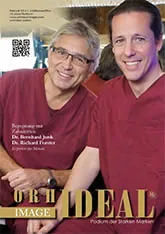

Click the images
telephone contact of the former practice - Mon-Fri 7:30 a.m.-6 p.m. (historical hours)

Historical phone: +49 (0)89 431 12 12
Dentists: Richard Forster and Johanna Egger
private and all statutory health insurance schemes
Baumkirchner Str. 18
81673 Munich Berg am Laim Trudering
Archive and website contact. Dr. Junk no longer treats patients and does not make appointments.
Urgent appointments, historically on the same day
Dental prosthesis repairs historically: please register by 9:30 a.m.

Historically, the form could be completed and printed at home to save time.
with all information pages of the former Munich practice
click the humorous practice video

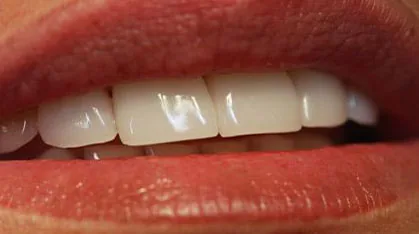
Minimally invasive, low-pain dental implants in Munich
Dental prosthetics - aesthetic fillings - Geriatric dentistry - Periodontology - root canal treatment
At the former practice, attractive teeth were created with high-tech dentistry and in-house dental laboratory equipment - all under one roof
The former dental practice on the market square in Berg am Laim was also easy to reach from Trudering, Waldtrudering and Bogenhausen.
The former practice combined services and expertise that were often hard to find elsewhere.
Historical range of services
This archive documents a long-established dental practice in Berg am Laim/Trudering that was refurbished after around 50 years of activity and employed 5 dentists, 4 dental technicians and about 20 staff members in 400 m². The different dental specialties were available on weekdays throughout the year, including holiday periods and Friday afternoons, with early opening from 7:30 a.m. The team looked after patients' dental problems and preventive care.
The former practice's in-house dental laboratory provided follow-up service for dental prosthetics. Rapid denture repair: Dental prosthesis repairs could almost always be completed within a few hours.
Better than guessing: modern 3D imaging: directly at the former dental practice.
Aesthetic, metal-free, implant-supported high-tech restorations full-contour zirconia crowns:(lower risk of chipping).
custom titanium abutments: these were produced with modern milling equipment for optimal adaptation of implant crowns to the gingival contour.
The former team aimed to preserve healthy teeth; in the event of tooth loss it was possible to replace the tooth root immediately with immediate implant placement. The minimally invasive technique aimed to reduce pain. One advantage was that minimally invasive implant procedures could often avoid expensive bone augmentation. Patients were also given advance information about implant prices(from a German manufacturer), including 3D imaging (CBCT)formerly from EUR 1,150; each additional implanthistorically from EUR 950.
Exact costs were provided before treatment. To help prevent dental problems, the prophylaxis team cleaned teeth with a gentle powder jet and polishing brush. On request there was a recall service to keep gums healthy and protect valuable restorations, even if they had been made elsewhere. The former practice had dentists and specialists for prevention, cleaning, fillings, crowns, extractions, removable dentures and minimally invasive implant treatment. practice These treatments were provided in the former Munich practice. The dental team of the former practice was the point of contact.
The former
in-house dental laboratory provided modern methods to adjust, repair or clean dental prostheses quickly. Three dental technicians looked after restorations. Detailed advice was provided on both medical aspects and costs. Because of the team structure, work could often be organised efficiently and therefore at lower cost at lower cost, saving time and sometimes money. At the time, patients could request a non-binding second opinion; advice was usually free of charge.

Web reference page
This archive was created to answer many questions about dentistry through multimedia material and clinical examples. During the active-practice years, the content was often used at the Munich practice to explain procedures. Patients could review the information at home and better understand decisions about their teeth. The images are deliberately realistic; anyone who does not want to see real photographs of the mouth should avoid the relevant galleries. A realistic image can explain more than many polished logos. Many patients reviewed the information before or after an appointment. questions historically sent to praxis@de-junk.de to the author and later collected in the FAQ The archived answers may still be useful for checking whether others have had similar problems. Today the site is solely for reading information about prosthetics, geriatric dentistry, dental aesthetics, gum problems and toothache The information does not replace an examination by your own dentist. The illustrated reference can be browsed using the navigation bar with historical clinical examples from the former practice. - low-pain and affordable -