 Follow Dr Junk on ArcaNuova
Ceramic vs zirconia CAD/CAM veneers
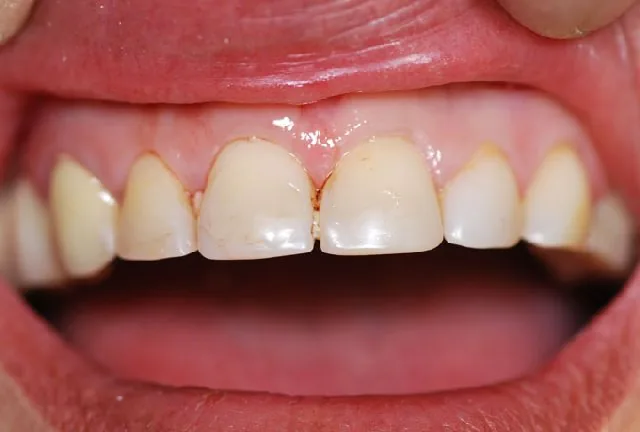
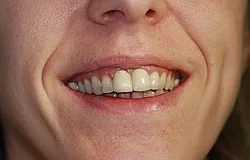
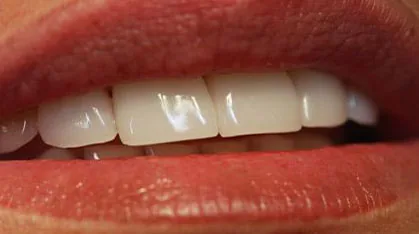
Durable aesthetic ceramic or zirconia veneers produced in the former Munich practice's in-house CAD/CAM laboratory.
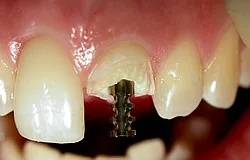
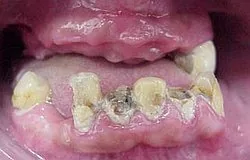
The patient repeatedly experienced discolouration and chipping of composite veneers and fillings.
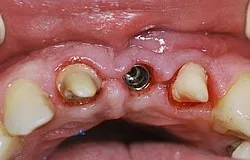
The enamel layer was carefully prepared
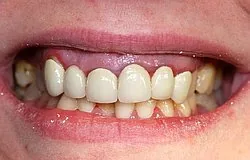
The CAD/CAM veneers were adhesively bonded
The teeth are now covered with Zirconia or ceramic, providing a hard surface resistant to oral acids.
Shape and colour modification - aesthetic veneers veneers ceramic vs CAD/CAM zirconia veneers
A CAD/CAM veneer made from ceramic or zirconia can closely mimic natural enamel. The patient's incisors had become progressively shorter and the composite restorations tended to discolour. In some patients, factors related to diet, hygiene, smoking and the oral environment can cause resin restorations to change colour over time. In such cases, ceramic veneers or zirconia veneers The translucency of a restoration, meaning how much light passes through the material, strongly influences how natural a tooth appears. Older porcelain-fused-to-metal crowns were less translucent because the metal substructure blocked light. All-ceramic materials offer excellent optical properties, although some can be more brittle. Zirconia is very strong, and newer generations have become more translucent, allowing use in the anterior region in suitable cases. Its strength permits relatively thin restorations. The choice between a veneer and a crown, however, depends on remaining enamel, tooth structure, occlusion and fracture risk. Adhesively bonded veneers can debond, particularly when the incisal margin is subjected to heavy loading.CAD/CAM Ceramic or zirconia veneers were produced in the in-house dental laboratory practice laboratory of the former Munich practice. The front-tooth veneers were adhesively bonded. The teeth were thus covered with ceramic or zirconia, providing a strong, stable surface. The dental technician adjusted the colour and shape of the computer-milled restorations until a harmonious result was achieved.
Individual CAD/CAM production began with a scan of the model or dental situation. The restoration could be designed on a computer, previewed and then milled from a block in the desired tooth shade. These were individually designed veneers rather than standard prefabricated shells. In the former practice's in-house laboratory, the dentist and dental technician designed the restoration according to tooth shape and the patient's preferences. One advantage of individual design is that the veneer can fit precisely, avoiding unnecessary thickness and limiting tooth preparation where clinically possible. Good bonding requires a thin, controlled cement layer. Digital design data can also make it easier to reproduce a restoration if it is damaged later. Patients with high aesthetic demands used these techniques to correct the shape, length and colour of front teeth. A small amount of enamel may need to be prepared; in return, a durable and colour-stable ceramic material is applied. In this case, after a composite mock-up, the patient chose to restore the teeth to their original length.
Aesthetic CAD/CAM veneers produced in Dr. Junk's former Munich in-house laboratory: ceramic or zirconia can correct shape and colour while preserving as much tooth structure as possible.

click the pictures of our female dentists and dentists
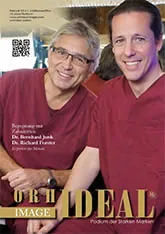
Click the images
telephone contact of the former practice - Mon-Fri 7:30 a.m.-6 p.m. (historical hours)

Historical phone: +49 (0)89 431 12 12
Dentists: Richard Forster and Johanna Egger
private and all statutory health insurance schemes
Baumkirchner Str. 18
81673 Munich Berg am Laim Trudering
Archive and website contact. Dr. Junk no longer treats patients and does not make appointments.
Urgent appointments, historically on the same day
Dental prosthesis repairs historically: please register by 9:30 a.m.

Historically, the form could be completed and printed at home to save time.
with all information pages of the former Munich practice
click the humorous practice video
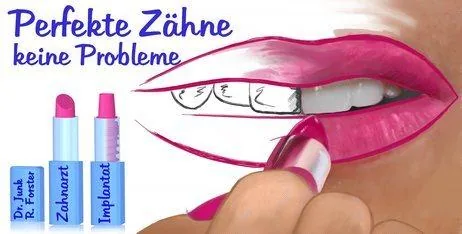
Minimally invasive, low-pain dental implants in Munich
Dental prosthetics - aesthetic fillings - Geriatric dentistry - Periodontology - root canal treatment
At the former practice, attractive teeth were created with high-tech dentistry and in-house dental laboratory equipment - all under one roof
The former dental practice on the market square in Berg am Laim was also easy to reach from Trudering, Waldtrudering and Bogenhausen.
The former practice combined services and expertise that were often hard to find elsewhere.
Historical range of services
This archive documents a long-established dental practice in Berg am Laim/Trudering that was refurbished after around 50 years of activity and employed 5 dentists, 4 dental technicians and about 20 staff members in 400 m². The different dental specialties were available on weekdays throughout the year, including holiday periods and Friday afternoons, with early opening from 7:30 a.m. The team looked after patients' dental problems and preventive care.
The former practice's in-house dental laboratory provided follow-up service for dental prosthetics. Rapid denture repair: Dental prosthesis repairs could almost always be completed within a few hours.
Better than guessing: modern 3D imaging: directly at the former dental practice.
Aesthetic, metal-free, implant-supported high-tech restorations full-contour zirconia crowns:(lower risk of chipping).
custom titanium abutments: these were produced with modern milling equipment for optimal adaptation of implant crowns to the gingival contour.
The former team aimed to preserve healthy teeth; in the event of tooth loss it was possible to replace the tooth root immediately with immediate implant placement. The minimally invasive technique aimed to reduce pain. One advantage was that minimally invasive implant procedures could often avoid expensive bone augmentation. Patients were also given advance information about implant prices(from a German manufacturer), including 3D imaging (CBCT)formerly from EUR 1,150; each additional implanthistorically from EUR 950.
Exact costs were provided before treatment. To help prevent dental problems, the prophylaxis team cleaned teeth with a gentle powder jet and polishing brush. On request there was a recall service to keep gums healthy and protect valuable restorations, even if they had been made elsewhere. The former practice had dentists and specialists for prevention, cleaning, fillings, crowns, extractions, removable dentures and minimally invasive implant treatment. practice These treatments were provided in the former Munich practice. The dental team of the former practice was the point of contact.
The former
in-house dental laboratory provided modern methods to adjust, repair or clean dental prostheses quickly. Three dental technicians looked after restorations. Detailed advice was provided on both medical aspects and costs. Because of the team structure, work could often be organised efficiently and therefore at lower cost at lower cost, saving time and sometimes money. At the time, patients could request a non-binding second opinion; advice was usually free of charge.
Web reference page
This archive was created to answer many questions about dentistry through multimedia material and clinical examples. During the active-practice years, the content was often used at the Munich practice to explain procedures. Patients could review the information at home and better understand decisions about their teeth. The images are deliberately realistic; anyone who does not want to see real photographs of the mouth should avoid the relevant galleries. A realistic image can explain more than many polished logos. Many patients reviewed the information before or after an appointment. questions historically sent to praxis@de-junk.de to the author and later collected in the FAQ The archived answers may still be useful for checking whether others have had similar problems. Today the site is solely for reading information about prosthetics, geriatric dentistry, dental aesthetics, gum problems and toothache The information does not replace an examination by your own dentist. The illustrated reference can be browsed using the navigation bar with historical clinical examples from the former practice. - low-pain and affordable -